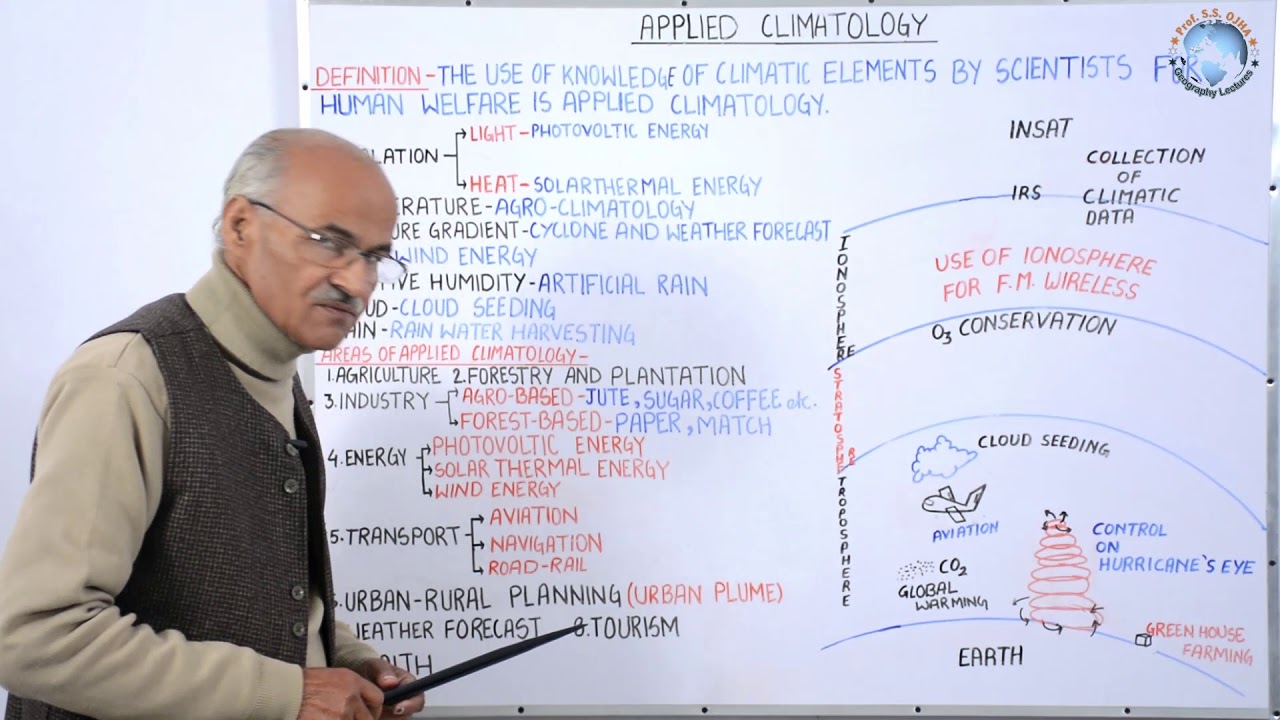
The field of Applied Climatology stands as a cornerstone of modern environmental science, functioning as a vital instrument used by meteorologists, planners, and policymakers to ensure societal resilience. Historically, its significance has peaked as global weather variability increased, serving as a dual-purpose tool: it manages operational risks by applying historical atmospheric records to current human activities while simultaneously securing a guaranteed pathway for sustainable development. By mandating that strategic planning maintain a strong connection to regional climate realities, the applied climatology framework provides the institutional stability necessary for long-term economic safety and resource management across critical global sectors.
The Narrative of Practical Science: Defining Applied Climatology
- The Structural Logic of Meteorological Applications
In the complex landscape of Earth System Sciences, applied climatology acts as a mandatory buffer between raw data and real-world application. Unlike theoretical climatology, which deals strictly with the underlying physical physics of the atmosphere, Applied Climatology requires experts to maintain a clear focus on how high-quality weather data can be applied within our communities. This narrative of prudence and adaptation ensures that even in times of severe weather shifts, societies possess the preparedness to meet evolving climate challenges while channeling capital into nation-building infrastructure through climate-smart designs.
Analyze the Vital Fields of Applied Climatology
The technical connection between climate records and the operational decisions made by global industries is formally defined as Applied Climatology. It serves as a regulatory valve for resource allocation and planning across the entire economy.
Explore Practical Implementations in Agriculture and Urban Planning
Under this scientific mandate, resource managers must divert a portion of their efforts toward analyzing weather histories. This categorization of practical applications includes optimizing crop cycles, mitigating urban heat indices, and executing flood risk assessments. When planners enforce climate-integrated guidelines, they intentionally reduce the unpredictable losses felt by the private sector, creating a powerful risk-mitigation effect. Furthermore, this mechanism influences public sector financing by directing infrastructure capital toward resilient state-backed assets.
- (i) Optimized crop selection and planting schedules provide an immediate safety net for farmers.
- (ii) Urban heat island studies guide developers to design cooler, more sustainable cities.
Deep Dive into Disaster Management and Ecosystem Conservation
The ongoing century represents a period of active environmental regulation. Environmental agencies utilize applied climatology extensively to support public safety investment goals without the economic shocks of unforeseen natural disasters.
Chronicle of Strategic Predictive Models and Resource Management
The deployment of predictive models reflects the shifting priorities of the global green economy. By utilizing advanced metrics, emergency teams have moved from reactive strategies to highly organized proactive setups. For example, early warning models track severe moisture deficits and shifting precipitation trends, allowing local systems to adapt to potential hazards before they escalate.
- (i) Predictive models assist emergency response teams in preparing for extreme weather events well in advance.
- (ii) Climatology data directly informs post-disaster recovery strategies and long-term infrastructure repair.
- (iii) Ecosystem metrics help field conservationists protect local biodiversity from rapid temperature changes.
Finally, global agreements demand a uniform climate evaluation framework for all scheduled industrial expansions, aligning perfectly with the safety goals of modern environmental baseline policies. Today, integrated climate planning remains a global standard.
Important Field Verification: Please note that older engineering frameworks or previous drafts specifying climate parameters as static historical constants are outdated. Under modern planning guidelines, these ratios are systematically updated to incorporate dynamic climate change trends to protect modern structural pathways.
Evaluate the Strategic Objectives and Macroeconomic Impact
The overarching goal of applied climatology policy is the systematic reduction of climate-induced economic vulnerabilities. By modulating how we use regional liquid and atmospheric datasets, scientists maintain a firm grip on risk reduction.
Assessing Risk Control, Infrastructure Solvency, and Resource Stability
The primary impact of applied climatology is threefold. First, it acts as a tool for disaster control by limiting the damage multiplier effect of extreme weather. Second, it guarantees infrastructure solvency by forcing development bodies to design around safe-haven parameters like 100-year flood lines. Third, it facilitates public resource planning, ensuring that communities can fund their growth pathways through changing seasons at stable operating costs. During periods of extreme climate anomalies, planning agencies strategically raise safety margins to safeguard public funds and curb excessive structural damage.
Summary
The Applied Climatology framework remains a fundamental pillar of our global planning architecture. From its roots in historical weather bookkeeping to the streamlined modern prediction models established today, this field has successfully balanced the need for immediate structural safety with the requirements of long-term environmental balance. While it necessitates a meticulous allocation of resources for initial research, the trade-off provides a stable environment for long-term economic growth and protects the structural integrity of our public institutions against sudden environmental shocks.
Quick Revision Points for Students
Reviewing the core empirical and regulatory facts ensures full retention for examinations.
- (i) Applied Climatology applies historical climate records to solve practical human problems, unlike theoretical climatology which focuses purely on the underlying atmospheric physics.
- (ii) The discipline serves as a core asset in agriculture, helping optimize crop choices and planting timelines around predictable weather cycles.
- (iii) Modern urban planning depends on urban heat island studies to layout green corridors and minimize concrete-driven heat retention.
- (iv) In contemporary disaster management, predictive models form the baseline defense to create resilient early warning warning networks.
Frequently Asked Questions (FAQ)
Q1: What are the primary sectors that benefit from applied climatology?
A1: The primary fields include agricultural management, urban development, disaster risk reduction, and sustainable resource conservation.Q2: How does applied climatology assist in managing major natural disasters?
A2: It uses historical data to build predictive models that forecast extreme weather patterns, giving local systems time to deploy early warnings and design resilient recovery strategies.Q3: What is the main difference between applied climatology and standard theoretical meteorology?
A3: Theoretical meteorology and climatology focus strictly on tracking atmospheric processes and mechanics. Conversely, applied climatology takes that structural data and converts it into actionable solutions to protect human lives, businesses, and ecosystems.