The movement of Aryan tribes and the birth of Rigvedic Society mark a defining turning point in the history of the Indian subcontinent. Spanning roughly from , this era witnessed large-scale migrations, intense tribal conflicts over grazing lands, and the emergence of pastoral economies. During this period, early political institutions took root, social kinship networks expanded, and nature-centered religious rituals flourished. Understanding these structural changes gives us a clear window into the origins of ancient Indian civilization. For students and competitive exam aspirants, mastering these concepts reveals how early governance, economy, and culture laid the groundwork for subsequent historical developments across South Asia.
In this chapter, you will understand:
- The migration routes and Eurasian origins of the early Aryans
- The cattle-driven economy, pastoral lifestyle, and early trade mechanisms
- Tribal polity, including the Rajan and advisory assemblies like Sabha and Samiti
- Social hierarchy, kinship networks, and the worship of nature deities
Why this topic matters: This chapter forms the foundation of ancient Indian history syllabi for competitive examinations. It explains how pastoral migration transformed into organized social structures, political assemblies, and cultural traditions that shaped early South Asia.
Core Idea: Between , pastoral Aryan groups migrated into northern India, bringing an Indo-European language and establishing a society organized around cattle wealth, tribal assemblies, patriarchal kinship, and the ritual veneration of natural forces.
Aryan Migration and the Socio-Political Evolution of Rigvedic Society (2000–1500 BC) in Ancient India
The entry of the Aryans into the northwestern regions of the Indian subcontinent triggered significant changes in lifestyle, social coordination, and cultural expression across the region.
A Detailed Look into the Aryan Influx and the Genesis of the Rigvedic Age
Originating from the open steppes of Eurasia, early Aryan groups carried traditions, pastoral practices, and dialects belonging to the broader Indo-European language family. Their gradual move eastward altered the socio-economic setup of northwestern South Asia, giving rise to the rich oral traditions recorded in the Rigveda.
- (i) The original ancestral homeland of the Aryans is theorized to be in Eurasia, characterized by deep-seated roots in the expansive Indo-European linguistic family.
- (ii) The early Aryan existence was largely defined by a nomadic and pastoral lifestyle, which is why archaeological evidence tracing their movements is notably limited compared to settled civilizations.
- (iii) The migratory path involved an initial move towards Iran around , culminating in their eventual arrival and settlement across the Punjab region and the upper Gangetic plains around .
Early Settlement Patterns in the Sapta Sindhu
Upon entering the land of seven rivers, these pastoral communities established semi-permanent camps along fertile river banks, adapting their seasonal movements to local water availability and grazing lands.
- Transhumance practices guided seasonal animal movements between hills and river valleys.
- River systems provided essential routes for communication and livestock watering.
- Temporary settlements minimized permanent environmental impact while supporting herds.
- Proximity to pastures directly determined the survival and growth of each clan.
Tribal Conflicts and the Pursuit of Cattle Wealth in the Rigvedic Age
Inter-clan dynamics were heavily influenced by disputes over herds, pasture control, and territorial movement across the fertile plains.
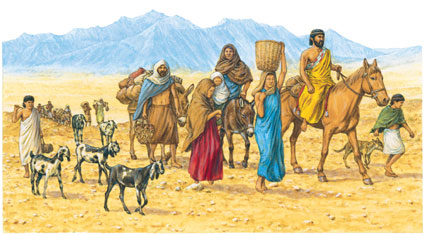
- The Rigvedic social and political landscape was inherently shaped by incessant rivalries and clashes among the various tribes, primarily driven by the need to secure cattle wealth and gain control over vital, fertile pasture lands.
- (i) The era was marked by frequent, intense clashes between tribal groups for the possession of cattle and pasture, which were the most tangible forms of wealth at the time.
- (ii) The term for warfare or a major raid during this period was the evocative word “Gavisthi”, which literally translates to the “quest for cows”, underscoring the central economic and strategic importance of cattle.
- (iii) These inter-tribal rivalries and the need for organized defense and offense were the foundational forces that shaped the early political institutions and the role of the tribal chief, or Rajan.
Economic Life: Agriculture, Settlements, Crafts, and Trade in the Rigvedic Period
The economy centered on animal husbandry, while small-scale farming, rudimentary metalwork, and informal barter networks supported daily household needs.
- Cattle Rearing: The Linchpin of Rigvedic Economic Activity: The tending of livestock, particularly cattle, was the paramount occupation and the ultimate basis of both individual and social wealth, as epitomized by the Gavisthi concept.
- (i) Agriculture emerged as a supplementary or secondary activity, involving basic techniques of ploughing, sowing of seeds, and harvesting of crops, though it had not yet surpassed the importance of pastoralism.
- (ii) Crafts and Artisanship were evident, including the production of rudimentary pottery, weaving of textiles, essential carpentry, processing of leather, and early metalwork using copper or bronze, referred to as ayas.
- (iii) Settlements were generally temporary due to the semi-nomadic lifestyle, but the beginnings of more structured living are indicated by sites like Bhagwanpura, which showed evidence of simple mud fortifications.
- (iv) Trade was minimal and localized; a structured, standardized currency system was absent, making barter the dominant method for exchange of goods.
Tribal Polity and Governance: The Rajan, Sabha, Samiti, and Gana
Early political structures relied on popular consent, clan lineage, and collective decision-making assemblies to maintain internal order and defend tribal assets.
- Governance in the Rigvedic tribes was a nascent system based on a hereditary, yet popularly supported, leadership model, bolstered by several powerful advisory and deliberative assemblies.
Tribal Leadership and Advisory Structure
Power was distributed between the elected or hereditary leader and broad community councils that managed justice, warfare, and ritual distribution.
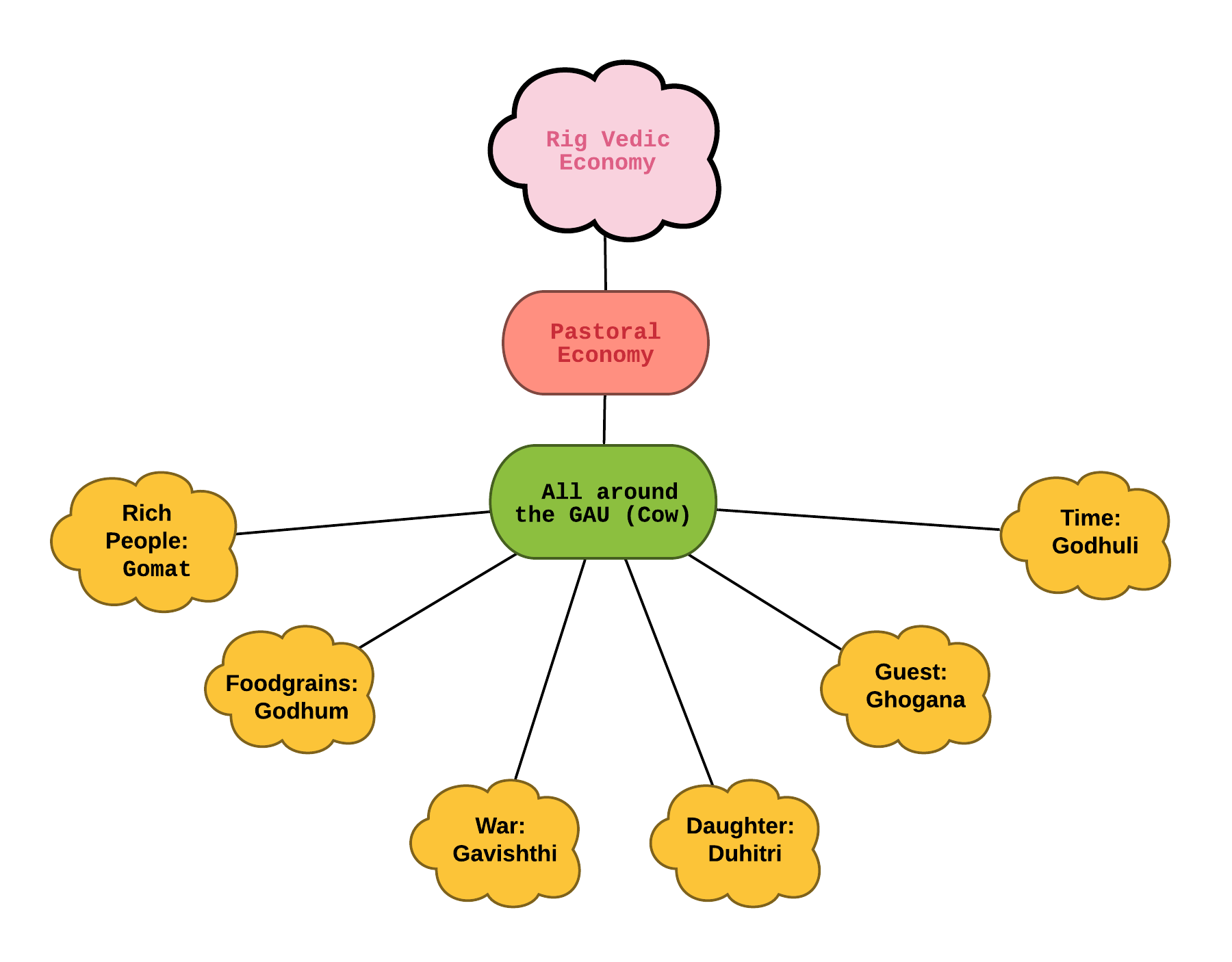
Cattle at the Core of the Rigvedic Economy and Wealth System The Rajan: Leader of the Tribe
The Rajan was the chief figure, primarily functioning as the war leader and titular head of the entire tribe (jana). While the position often became hereditary, the Rajan’s authority was not absolute and required continual validation through community and tribal support.
- (i) His main duty was the protection of the tribe and its primary asset, the cattle, especially during the frequent raids and Gavisthi.
- (ii) He received voluntary offerings, or bali, from the people, signifying his non-absolute authority and dependence on the tribe.
The Crucial Role of Key Assemblies in Governance
Several tribal assemblies played significant advisory and deliberative roles, acting as checks on the Rajan's power and involving the populace in decision-making.
- (a) Sabha – This was typically a powerful Council of Elders or the nobility, dealing with serious political matters, judicial functions, and advising the Rajan.
- (b) Samiti – The Samiti represented a Popular Assembly of the entire tribe, where major decisions, especially those concerning war and peace, were discussed and the Rajan was sometimes elected or reconfirmed.
- (c) Vidatha – Functioning primarily as a Family-based Council, it handled various religious, political, and social ceremonies, showing an earlier stage of tribal organization.
- (d) Gana – This term referred to smaller sub-groups or units within the larger tribal structure, also possessing a degree of self-governance.
Advisors and the Lack of Permanent Administration
The Rajan was assisted by key functionaries, but the nomadic lifestyle of the time prevented the establishment of a sophisticated, permanent administrative or military apparatus.
- (i) The Purohita (Chief Priest) and the Senani (Commander of the Army) were the two most important officials who advised the Rajan on religious and military matters, respectively.
- (ii) Militias were raised spontaneously from the tribe only in times of urgent need or war; there was no permanent, standing army to support a centralized state.
- (iii) The inherently nomadic lifestyle meant that the focus remained on tribal movement and protection, thereby preventing the formation of a permanent, salaried civil administration system.
The Tribal Family System and Social Division
Kinship provided the primary framework for social identity, household governance, and early functional groupings across the clans.
- Kinship and the family unit were the fundamental organizational blocks of the Rigvedic society, establishing a strong sense of collective identity and adherence to patriarchal norms.
- (i) Kinship formed the bedrock of social organization; the entire tribe was known as the jana, which was composed of multiple extended families.
- (ii) Families were unequivocally patriarchal in nature, with the male head of the household, the grihapati, wielding considerable authority over the family unit.
- (iii) Marriages were primarily utilized to forge and strengthen inter-clan and tribal ties, although men were generally the dominant figures in all major religious and social roles.
Social Structure and the Early Varna Divisions in the Rigvedic Age
Early social classifications were flexible, permitting occupational mobility and resource sharing before turning into rigid hereditary castes.
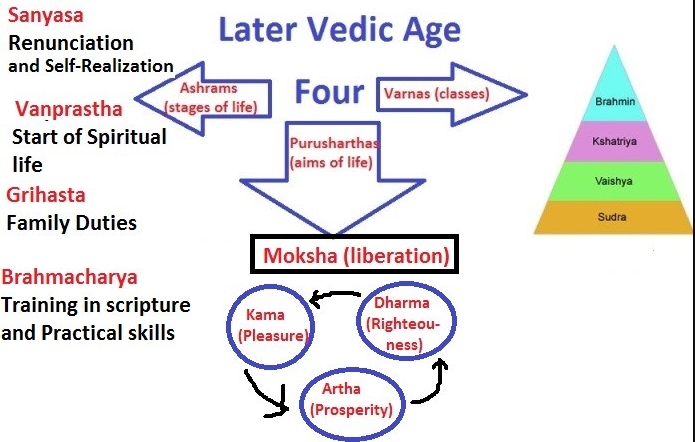
Illustration of the Ashram System and the Early Stages of the Varna System - (i) The early community was characterized by an initially egalitarian society where differences were not rigid, but divisions based on occupation and function slowly started to solidify over time.
- (ii) The nascent stage of the varna system saw the gradual classification of people into four principal functional groups: the Brahmana (Priests), Kshatriya (Warriors/Rulers), Vaishya (Farmers/Traders), and Shudra (Servants/Laborers), though these distinctions were less rigid than in the later Vedic period.
- (iii) Social mobility was still possible and was largely based on the acquisition of war booty and gifts, rather than being determined by permanent ownership of land, which was not yet widespread.
Deities, Nature Worship, and Religious Beliefs of the Rigvedic People
Spiritual practices centered on natural phenomena, personified deities, and practical sacrifices designed to secure earthly wellbeing, livestock, and victory.
- (i) Indra, the Mightiest Deity: Revered as the God of War, Storm, and Rain, he was known by the epithet Purandara, meaning “destroyer of forts,” symbolizing his role in tribal conflicts.
- (ii) Agni, the Mediator: The Fire deity, Agni, held an exceptionally important position as the essential mediator between the gods and the humans, carrying the offerings and prayers from earth to the heavens.
- (iii) Varuna, the Moral Guardian: He was the custodian of cosmic law and moral order (Rita), ensuring the universe functioned correctly and punishing those who deviated from ethical conduct.
- (iv) Soma, the Sacred Plant:Soma was worshiped both as a deity and was central to the rituals as the name of the potent, sacred drink consumed during ceremonies.
- (v) Maruts, the Storm Forces: These deities represented the potent and often terrifying forces of nature, specifically the storms and winds, highlighting the Rigvedic respect for nature's power.
- (vi) Female Deities: Though fewer in number than the male gods, female deities like Aditi (Great Mother) and Ushas (Dawn) symbolized important concepts like motherhood and the cyclical nature of time.
- (vii) Purpose of Worship: Unlike later abstract philosophical aims, prayers were pragmatic, focusing on requests for prosperity, abundant cattle, male children, and physical health.
Quick Revision Capsule
Essential takeaways and key structural components of Rigvedic society for rapid review:
| Domain | Key Features & Terminology | Socio-Historical Impact |
|---|---|---|
| Migration & Timeline | Originated in Eurasia; moved via Iran to Punjab () | Introduced Indo-European dialects and pastoral transhumance to northern India. |
| Economy & Wealth | Pastoralism, cattle-centric, Gavisthi (quest for cows), barter trade | Livestock served as the primary measure of prosperity and cause for inter-tribal conflict. |
| Political Structure | Rajan (chief), Purohita, Senani, absence of standing army | Governance relied on community support without centralized state bureaucracy. |
| Assemblies | Sabha (elders), Samiti (popular clan body), Vidatha, Gana | Checked the power of the Rajan and ensured participatory tribal decision-making. |
| Social & Religious Life | Patriarchal (grihapati), fluid varna, worship of Indra, Agni, and Varuna | Fostered kinship-based solidarity and naturalistic ritual offerings for practical prosperity. |
Summary
The study of the Aryan Migration and the evolution of Rigvedic Society offers crucial insights into the foundational phase of ancient Indian history. Between , pastoral groups settled in the northwestern plains, establishing a cattle-centric economy where conflict, wealth, and status revolved around livestock. Political authority rested with the Rajan, whose leadership was guided and checked by tribal assemblies like the Sabha and Samiti. Social organization maintained fluid occupational divisions alongside a strong patriarchal household structure led by the grihapati. Religiously, the community venerated personified natural forces—seeking health, male offspring, and herds through sacrifices to deities like Indra, Agni, and Varuna. Mastering these elements provides students with a solid framework for understanding the transition into the later urbanized and state-oriented Vedic periods.
Quick Revision Points for Exams
Key parameters to double-check during rapid revision:
- (i) Migration path: Eurasia → Iran () → Punjab / Sapta Sindhu ().
- (ii) Core economic term: Gavisthi refers to tribal conflicts or raids driven by the "quest for cows."
- (iii) Governance check: Sabha was the council of elders; Samiti was the general assembly of the entire tribe.
- (iv) Religious focus: Worship was naturalistic and pragmatic, aiming for physical health, cattle, and victory rather than spiritual salvation.
- Exam Tip: Always distinguish between the fluid, occupational varna divisions of the early Rigvedic age and the rigid, birth-based caste hierarchy that emerged in the later Vedic period. Questions often test the democratic nature of assemblies like the Sabha and Samiti alongside the non-absolute power of the Rajan.
Frequently Asked Questions (FAQ)
Q1: What was the significance of cattle in Rigvedic society?
A1: Cattle represented the primary form of wealth and social status. Most inter-tribal conflicts, known as Gavisthi ("quest for cows"), were fought to acquire herds and pasture lands.Q2: How did the Rajan govern without a standing army or bureaucracy?
A2: The Rajan relied on voluntary tributes (bali), advice from priests (Purohita) and commanders (Senani), and approval from tribal assemblies like the Sabha and Samiti. Militias were raised from the clan only when needed.Q3: Was the Varna system rigid during the Rigvedic period?
A3: No, the early varna system was flexible and based on occupation rather than birth. Social mobility was possible through wealth accumulation, war booty, and talent, unlike the rigid caste structures of later eras.